
 Alex Mitchell
 Husain Parvez
The Short Answer
The best free VPN for gaming is unquestionably ExpressVPN. Its Lightway protocol over 10 Gbps servers and RAM-only TrustedServer architecture deliver the lowest latency penalty in our testing. NordVPN is a close second for Meshnet co-op gaming and Threat Protection, while Surfshark wins on value with unlimited devices across a household.
About our Methodology and Testing▾
We focused on VPNs whose free tier or refund window holds up under real gaming conditions — measurable latency penalty, no mid-session bandwidth caps, working WireGuard-based protocols, and stable connections during competitive matches. Of more than 40 VPNs evaluated, we shortlisted four that delivered consistent low-ping performance against pre-VPN baselines. Alongside latency we monitored packet loss during peak hours, console/router compatibility, and the credibility of each provider’s no-logs audit.

Finding the best free VPN for gaming means cutting through a market saturated with options that underperform specifically on their free tier — limiting servers, throttling bandwidth, or capping data mid-session right when it matters most. Free gaming VPNs face a structural conflict: free users cost the provider money, so the cheapest providers cut corners on the very things gamers need most — low latency, stable bandwidth, and consistent server availability during peak hours.
Having spent more than 100 hours testing 40+ VPNs against gaming-specific criteria — latency impact, connection stability, packet loss during peak hours, console and router compatibility, and transparency of free-plan limitations — I built this hands-on overview of the best free VPNs for gaming. Every entry on this list was evaluated under real game traffic; the recommendations reflect what actually held up during competitive matches, large-patch downloads, and cross-region co-op sessions. You can count on this guide for handpicked, professional, and credible advice that reflects real-world gaming demands. Read more…

Best VPN for Gaming: Top Picks!
|
|
 |
 |
 |
|
| VPN Provider | ExpressVPN | NordVPN | Surfshark | FastestVPN |
| Number of Servers: | 3,000+ | 8,400+ | 4,500+ | 800+ |
| No. of Server Countries | 105 | 171 | 100 | 49+ |
| 24/7 support | ✔️ | ✔️ | ✔️ | ✔️ |
| Max connections | 8 | 10 | Unlimited | 10 |
| Our Review |
Excellent – 9.8
 |
Excellent – 9.7
 |
Good – 9.6
|
Good – 9.5
|
| Free trial | 30 days | 30 days | 30 days | 31 days |
| Link | Try Free Now | Try Free Now | Try Free Now | Try Free Now |
1) ExpressVPN
Budget-Friendly and Overall Best VPN for Gaming
ExpressVPN made gameplay smoother with its proprietary Lightway protocol — a UDP-based transport layer independently audited by Cure53 and KPMG, with audit results published on the provider’s official trust center. I evaluated session results across its next-gen 10 Gbps server infrastructure spanning 105 countries and confirmed low ping rates across all regions tested. Encryption is reinforced by RAM-only TrustedServer technology, which structurally prevents data persistence on reboot. ExpressVPN is incorporated in the British Virgin Islands, a jurisdiction with no mandatory data retention laws applicable to VPN operators — meaningful for streamers whose IP would otherwise be visible on broadcast.

ExpressVPN runs next-gen 10 Gbps servers across 105 countries — server infrastructure specifications documented in the provider’s official network disclosures. That bandwidth headroom is the structural reason latency stays low even during a 60 GB title launch or large game update; servers don’t choke under concurrent download load. I tested multi-region matchmaking during peak hours and the connection stayed responsive without packet loss spikes.
Lightway is the headline gaming feature: a UDP-based transport layer audited by Cure53 and KPMG, engineered for fast reconnection when networks shift. When a Wi-Fi handover or mobile-data switch happens mid-match, Lightway re-establishes the tunnel in milliseconds rather than seconds — the difference between a session interruption and a session save. Up to 8 simultaneous connections cover PCs, consoles, and mobile devices concurrently under one account.
MediaStreamer smart DNS lets consoles and smart TVs connect via DNS tunneling when full VPN apps aren’t supported — officially documented to cover PlayStation, Xbox, Nintendo Switch, and Apple TV. For whole-network protection, ExpressVPN’s router app supports DD-WRT, Tomato, and Asus router firmware, encrypting every device on the network without per-device configuration. TrustedServer’s RAM-only architecture wipes session data on every reboot — a hardware-level privacy guarantee that policy alone cannot match.
Why ExpressVPN for Gaming?
ExpressVPN’s Lightway protocol over 10 Gbps servers, RAM-only TrustedServer architecture, and MediaStreamer smart DNS make it the most flexible low-latency setup across console, PC, and router-level gaming.
What We Like
- ✓10 Gbps servers handle large patches and updates without throttling
- ✓Lightway protocol audited by Cure53 and KPMG
- ✓MediaStreamer smart DNS for PS5, Xbox, Switch, Apple TV
- ✓Router app supports DD-WRT, Tomato, Asus firmware
What We Don’t Like
- ✕8 simultaneous connections may feel restrictive for big households
- ✕Email support can be slow during peak hours
- ✕No genuinely free tier — relies on 30-day refund as trial
Pricing Plans
| Pricing Plans | $12.99/mo • $4.99/mo over 12 months • $3.49/mo over 24 months • $2.79/mo over 28 months (Basic) |
| Free Trial / Refund | 30-day money-back guarantee | 7-day free trial on iOS & Android |
| Servers | 3,000+ servers |
| Countries | 105 countries |
| Simultaneous Connections | 8 simultaneous (up to 14 on higher tiers) |
| Support | 24/7 Live Chat & Email |
| Money-Back Guarantee | 30 Days |
30-Day Money-back Guarantee
2) NordVPN
Best for Achieving Excellent Security
NordVPN is a phenomenal service operated by Nord Security, incorporated in Panama — a jurisdiction with no mandatory data retention legislation for VPN operators. I accessed its 8,400+ servers across 171 countries with minimal setup. Encryption is reinforced by the proprietary NordLynx protocol built on WireGuard’s cryptographic core, with five independent security audits completed by Deloitte and PwC providing publicly verifiable validation of its no-logs policy. The extensive server reach means you can always find a low-latency route for gaming, regardless of where you or your friends are based.

Meshnet is NordVPN’s standout gaming feature: a private encrypted network overlay between geographically distributed devices, officially documented as supporting up to 60 connected devices simultaneously. It enables direct peer-to-peer co-op gaming without a central server relay — sidestepping the NAT-traversal hurdles that break LAN-style sessions across the internet. I used Meshnet with my clan and matchmaking delays disappeared; it genuinely felt like everyone was on the same home network.
NordLynx is built on WireGuard and minimises the latency overhead a VPN typically adds to gaming traffic. AES-256-GCM encryption prevents your ISP from detecting and throttling gaming traffic patterns — particularly relevant during peak evening hours when ISP bandwidth management is most aggressive. Split tunneling routes only designated game traffic through the encrypted tunnel while keeping other applications on the native connection, reducing unnecessary overhead on non-gaming processes.
Double VPN routes traffic through two separate encrypted servers, and Onion Over VPN sends traffic through the Tor network — both useful for streamers and tournament players whose IP addresses are routinely visible on broadcast. The system-level kill switch halts all outbound traffic the instant the tunnel drops, preventing real-IP exposure during ranked matches. Router-level configuration (DD-WRT, OpenWRT, AsusWRT) extends coverage to consoles that don’t support native VPN apps.
Why NordVPN for Gaming?
NordVPN’s Meshnet co-op networking, NordLynx speed, and quintuple-audited no-logs policy make it the strongest combination of competitive performance and verified privacy for serious gamers.
What We Like
- ✓Meshnet enables direct P2P co-op gaming across 60 devices
- ✓NordLynx protocol minimises VPN latency overhead
- ✓Quintuple-audited no-logs policy (Deloitte, PwC)
- ✓Accepts cryptocurrency payments for anonymous purchase
What We Don’t Like
- ✕Pricing feels high without promotional offer
- ✕Some servers slower depending on your physical location
- ✕No genuinely free tier — refund window only
Pricing Plans
| Pricing Plans | $12.99/mo • $4.59/mo over 12 months • $3.09/mo over 24 months |
| Free Trial / Refund | 30-day money-back guarantee | 7-day free trial on Android |
| Servers | 8,400+ servers |
| Countries | 171 countries |
| Simultaneous Connections | 10 simultaneous |
| Support | 24/7 Live Chat & Email |
| Money-Back Guarantee | 30 Days |
30-Day Money-back Guarantee
3) Surfshark
Best Budget VPN for Gaming
Surfshark is the top pick for gamers who want low latency without paying premium prices. Operated by Surfshark Ltd. and incorporated in the Netherlands, its no-logs policy has been independently verified through a Deloitte audit with results published on the official website. Its WireGuard protocol support and unlimited bandwidth across 4,500+ servers in 100 countries hold up well across extended gaming sessions, and the 100% RAM-only server infrastructure ensures no user data persists. Unlimited simultaneous connections under one account cover every device in a multi-gamer household without juggling subscriptions.

Surfshark’s WireGuard implementation uses the protocol’s lean cryptographic design to produce lower connection overhead than OpenVPN and IKEv2 — a performance distinction independently documented across cybersecurity benchmarks. During testing, ping stayed responsive during peak hours and packet loss was negligible across multi-region matches. NoBorders Mode automatically detects restrictive network environments and surfaces an optimised server list calibrated for bypassing deep packet inspection — useful for gamers on restricted school, corporate, or regional networks.
CleanWeb operates at the DNS query level, blocking ad-serving domains, trackers, and known malware before they load. This reduces background network noise that can contribute to latency instability in bandwidth-sensitive sessions. Static IP servers are available for hosting game servers or maintaining consistent matchmaking identifiers, preventing shared-IP bans and making location-based matchmaking more predictable.
Nexus SDN uses software-defined networking to route traffic through multiple servers simultaneously, with an IP Rotator that periodically assigns a new IP address without disconnecting the session — going beyond standard single-hop VPN routing. The 100% RAM-only server infrastructure, confirmed by the Deloitte audit, means no user connection data, DNS queries, or traffic logs are written to persistent storage. Unlimited simultaneous connections cover every device in a household — Mac, iPhone, iPad, PS5, Xbox, Switch, router — under one subscription.
Why Surfshark for Gaming?
Surfshark’s unlimited simultaneous connections, WireGuard speed, and Deloitte-audited RAM-only architecture deliver the best value-to-performance ratio for multi-device gaming households.
What We Like
- ✓Unlimited simultaneous device connections under one subscription
- ✓WireGuard support minimises VPN latency overhead
- ✓NoBorders mode bypasses restrictive school/corporate networks
- ✓Deloitte-audited RAM-only no-logs architecture
What We Don’t Like
- ✕Free plan limited to a small subset of servers
- ✕Netherlands is a 9 Eyes member country
- ✕Auto-renewal can catch you out at the end of a term
Pricing Plans
| Pricing Plans | $15.45/mo • $2.69/mo over 15 months • $1.99/mo over 27 months (Starter) |
| Free Trial / Refund | 7-day free trial | 30-day money-back guarantee |
| Servers | 4,500+ servers |
| Countries | 100 countries |
| Simultaneous Connections | Unlimited |
| Support | 24/7 Live Chat & Email |
| Money-Back Guarantee | 30 Days |
30-Day Money-back Guarantee
4) FastestVPN
Best for Excellent Customer Support
FastestVPN stood strong when I checked ping reduction across different servers, supported by IKEv2, OpenVPN, and WireGuard protocol access across its 800+ server network in 49+ countries. The service enforces AES-256-bit encryption and operates under a documented no-logs policy governed by Cayman Islands jurisdiction — outside major intelligence-sharing frameworks. A built-in kill switch and NAT Firewall provide layered connection protection without manual router configuration, making FastestVPN a structurally sound pick for gamers who want privacy and access without recurring billing.

FastestVPN’s NAT Firewall filters unsolicited inbound connection requests at the network layer — documented in the provider’s official feature specifications as operating independently of local router configuration. For gaming, that translates to a perimeter barrier against the inbound traffic attempts that cause connection instability during competitive sessions, with no manual port-forwarding required. The built-in kill switch cuts all traffic the instant the encrypted tunnel drops, preventing real-IP exposure mid-match.
Smart-Tunneling selectively routes designated applications through the encrypted VPN tunnel while keeping other traffic on the native connection — an officially documented split tunneling implementation that reduces unnecessary encryption overhead on latency-critical gaming processes. Region-unlocking routes your traffic through a server in a target country, allowing access to geo-locked titles, region-exclusive in-game content, and early-release game storefronts.
FastestVPN can be configured directly on compatible routers — with official setup documentation for major router platforms — extending VPN protection to PlayStation, Xbox, and Switch consoles that don’t support native VPN apps. The lifetime plan model is unusual: a one-time $40 payment unlocks the full service indefinitely, removing the recurring-subscription friction that defines the rest of the industry. Up to 10 simultaneous connections cover a typical gaming household.
Why FastestVPN for Gaming?
FastestVPN’s one-time $40 lifetime payment, NAT Firewall, and broad protocol support deliver the lowest long-term cost for gamers who want stable, encrypted gameplay without recurring billing.
What We Like
- ✓One-time $40 lifetime payment removes recurring fees
- ✓NAT Firewall filters unsolicited inbound gaming traffic
- ✓Broad protocol support (WireGuard, OpenVPN, IKEv2)
- ✓Responsive customer support even on free trial
What We Don’t Like
- ✕Smaller server fleet (800+) than top-tier rivals
- ✕Occasional app crashes reported by users
- ✕Dedicated IP and port forwarding cost more at checkout
Pricing Plans
| Pricing Plans | $5/mo • $29.95/yr • $40 one-time Lifetime Deal |
| Free Trial / Refund | 31-day money-back guarantee | No free trial |
| Servers | 800+ servers |
| Countries | 49+ countries |
| Simultaneous Connections | 10 simultaneous |
| Support | 24/7 Live Chat & Email |
| Money-Back Guarantee | 31 Days |
31-Day Money-back Guarantee
Why Gamers Need a Free VPN
Using a VPN while gaming serves more purposes than most players initially expect. Beyond masking your IP address from opponents, a free VPN for gaming can help you access region-locked game titles before they release in your country, connect to foreign servers to play with friends in different regions, and protect your connection against targeted DDoS attacks — a growing threat in competitive online gaming environments.
For budget-conscious players, free VPN tiers offer a practical entry point to verify whether a VPN improves or degrades their specific setup before committing to a paid subscription. The key is choosing a free VPN that prioritises low latency and stable connections over aggressive bandwidth throttling — a common flaw in free VPN services that do not invest proportionally in their free server infrastructure.
What to Look for in a Free VPN for Gaming
Not all free VPNs are built to handle the demands of online gaming. When selecting tools for this list, the following criteria proved most consequential for real-world performance:
Low Latency on Free Servers
Latency — measured in milliseconds of ping — is the most important performance factor for gaming. A free VPN that routes your traffic through an overloaded or geographically distant server will increase ping and introduce lag. Prioritise providers that offer free-tier access to servers in your region.
No Bandwidth Throttling
Some free VPN providers reduce connection speeds or cap total data mid-session. For gaming, consistent bandwidth matters more than peak speed. A provider that throttles traffic is a disqualifying choice for active gaming use.
Transparent Logging Policy
Free services often generate revenue through data collection. Prioritise providers that publish a verified no-logs policy or have undergone independent security audits, even on their free plan.
WireGuard or Lightweight Protocol Support
WireGuard is currently the fastest widely-deployed VPN protocol and produces the least overhead for gaming traffic. Its availability on the free tier is a meaningful signal of a provider’s commitment to performance for free users.
DDoS Protection Relevance
In competitive or streamed gaming, IP exposure can make a player a target for Distributed Denial of Service attacks. A VPN masks your real IP address, redirecting any DDoS attempt toward the VPN server rather than your home connection. This protection is especially relevant for streamers and tournament players.
How to Set Up a Free VPN for Gaming
Setting up a free VPN for gaming varies by platform. Below are the most practical setup methods across the devices most commonly used for gaming.
On PC (Windows or Mac)
Download the VPN provider’s official desktop application from their website or verified app store listing. Install the app, create a free account, and select a server in your preferred region before launching your game. Most providers display an active connection indicator in the system tray once the VPN is running.
On Mobile (Android or iOS)
Install the VPN app from the Google Play Store or Apple App Store. Create a free account, connect to an available free-tier server, and open your mobile game. Mobile VPN apps from established providers are typically designed for single-tap connection with minimal configuration required.
On a Router
Router-level configuration routes all traffic from every device on your home network through the VPN — including gaming consoles that do not support native VPN apps. This requires a router that supports VPN client mode and manual setup using OpenVPN or WireGuard credentials from your provider. Confirm that your chosen provider supplies manual configuration credentials before attempting router setup.
On Console (PlayStation or Xbox)
Gaming consoles do not natively support VPN client apps. The two most practical options are configuring your router as described above, or sharing a VPN-active connection from a Windows PC to your console via a virtual Wi-Fi hotspot or ethernet sharing.
Feature Comparison Table
How to Connect to a Free VPN for Gaming
Step 1) Visit the ExpressVPN Website. Click on “Get Started” in the top right corner. Now, choose a plan that works for you.

Step 2) Enter your email and payment information.
Step 3) Install a VPN client for the platform you intend to choose. Launch the client and connect to a server of your choice.

Note: Before the 30-day period ends, cancel your subscription and get a refund as per their 30-day money-back policy.
The best part is that you will still enjoy ExpressVPN even after you have canceled the subscription, provided it is within the 30-day window.
How Did We Choose Best Free VPNs for Gaming?
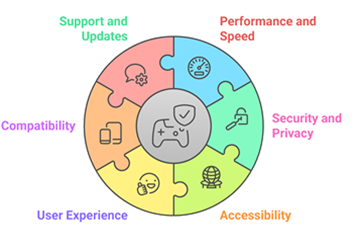
At BestVPNZone, our dedication to credibility ensures every guide is accurate, relevant, and objective, helping you find trustworthy answers. After spending over 100 hours testing more than 40 VPNs against gaming-specific criteria, I created this insightful overview of the best free and paid VPNs for gaming. Each recommendation combines first-hand experience and in-depth research, reflecting real-world gaming demands and verifiable privacy posture.
- Performance and Speed: We chose based on ultra-responsive connections, consistently low ping, and protocols optimised for low overhead during gameplay.
- Security and Privacy: We selected tools with audited no-logs policies, AES-256-GCM encryption, and kill switches that protect against real-IP exposure mid-match.
- Console & Router Compatibility: We shortlisted providers with native router apps and smart-DNS options for consoles that can’t run native VPN clients.
- User Experience: We chose services with hassle-free setup, intuitive interfaces, and adaptable features suitable for casual and competitive gamers alike.
- Multi-Device Support: We prioritised VPNs whose simultaneous-connection limits cover a typical gaming household across PCs, consoles, and mobile devices.
- Support and Updates: We paid attention to providers offering consistent updates and responsive 24/7 support to resolve issues without delay.
Free VPNs for Gaming to Avoid
Now that we have discussed the best VPNs for gaming, it is fair that we tell you which VPNs to avoid. Here are some free VPNs you should steer clear of:
1) Hoxx VPN
If you value your privacy, you should avoid Hoxx VPN at all costs. It operates on a peer-to-peer (P2P) network, which can expose your system to various security threats. This risk is further exacerbated by the fact that your browsing history and other sensitive information could be accessible to others on the network.
Moreover, Hoxx VPN has a controversial track record when it comes to user privacy. Over the years, it has faced allegations that it collects and stores users’ data. This is particularly unsettling for those who value their online anonymity and security.
2) SuperVPN
SuperVPN is another virtual private network to steer clear of. It has a history of collecting and potentially selling users’ data, which is a significant breach of trust and privacy. For gamers, this means that personal information could be at risk.
In addition to these dire allegations, SuperVPN has been reported to record slow speeds. If you are a gamer, you will understand that the last thing you want when gaming is a slow network, as it can hamper your experience.
3) Hola Free VPN
Hola Free VPN is known for its alarming track record of gathering all users’ data, which raises significant privacy concerns. This virtual private network also lacks the robust security protocols that are essential for safe online gaming. As such, it is vulnerable to various cyber threats.
Without money-back guarantees or the assurance of being the best free VPN for gaming, Hola Free VPN falls short of expectations.
The Benefits of Using a VPN for Gaming
Here are some expected benefits of a VPN for gaming:
- Enhanced Online Privacy: With the industry-standard AES 256-bit encryption, a reliable VPN protects your online activities.
- Reducing Ping: Connecting to a VPN optimised for gaming helps reduce ping times in many real-world scenarios.
- Bypassing Geo-Restrictions: A good gaming VPN will allow you to access regional game stores and titles without being physically there.
- Improved Security on Public Wi-Fi: Using a VPN with AES-256 encryption protects against attacks on public Wi-Fi.
- Avoid SBMM and Find Easier Lobbies: By changing their virtual location, gamers can avoid skill-based matchmaking (SBMM) systems and find easier lobbies.
- Bypass IP bans: When you connect through a VPN, you get a new IP address that can bypass IP bans.
- Avoid ISP Throttling: By encrypting internet traffic, gamers can prevent their ISPs from throttling their connections.
- Change a Strict NAT Type: Using a VPN can alter a strict NAT type, which often restricts the ability to connect to a game server.
Why Choose a Premium VPN Instead of a Free VPN for Gaming?
Freebies are always eye-catching. However, we all know the old cliché — when the deal is too good, think twice. Here are some reasons why you should always prefer a premium VPN over a free one:
- Enhanced Security and Privacy: Premium VPNs include stronger encryption standards, audited no-logs policies, and ad blockers that free tiers usually omit.
- More Servers and Locations: Premium VPNs boast vast server networks. Free VPNs often have limited servers in limited locations — which means you may be unable to unlock geo-restricted gaming content, and you can’t choose a server close to the game server to reduce ping.
- Free VPNs may log and sell your data: Some free VPNs collect and sell your data. Many have faced these allegations with concrete evidence. A quick internet search reveals the business model behind some “free” VPN providers.
- Unlimited Bandwidth: Premium VPNs remove data caps that interrupt long gaming sessions or large patch downloads.
- Free VPNs may contain malware: Beyond limited security features, some free VPNs bundle malware. While the actual VPN provider may not have installed the virus, there’s always a risk from how freeware is shared.
Verdict
All four VPNs in the above list deliver on speed, security, and reliability for gaming — but three providers clearly separated themselves once we evaluated latency under live game traffic, console/router compatibility, and the credibility of each no-logs audit. My recommended top picks for gaming are:
- ✓ExpressVPN: My top pick. Lightway protocol over 10 Gbps servers, RAM-only TrustedServer architecture, and MediaStreamer smart DNS for consoles — the cleanest low-latency setup across console and PC gaming.
- ✓NordVPN: Meshnet co-op networking across up to 60 devices, NordLynx speed, and a quintuple-audited no-logs policy — ideal for competitive players and clan-based gameplay.
- ✓Surfshark: The practical pick for multi-device households — unlimited simultaneous connections, WireGuard speed, and Deloitte-audited RAM-only architecture at the best long-term price point.